Why Customers Prefer Text Messaging for Business Communication: Understanding the Shift and Benefits
Why Customers Prefer Text Messaging for Business Communication
Estimated reading time: 7 minutes
Key Takeaways
- Customers prefer text messaging over phone calls and emails for business communication.
- Statistics show strong consumer demand for fast, direct, and convenient messaging.
- Business texting results in higher customer engagement and satisfaction.
- SMS automation streamlines interactions and personalizes outreach.
- Implementing best practices ensures a positive customer experience.
Table of Contents
- The Shift in Customer Communication
- Why Text Messaging is Taking Over
- The Benefits of Text Messaging
- Enhancing Customer Experience
- What is SMS Automation?
- Practical Integration Strategies
- Best Practices for Business Texting
- Success Stories
- Conclusion
The Shift in Customer Communication
Current Customer Communication Trends
The landscape of customer communication is evolving. Traditionally, businesses relied on phone calls and emails to interact with their customers. These methods, while still in use, are being overshadowed by the convenience and efficiency of business texting.
- Text Messaging's Rise: Text messaging is becoming the preferred choice for many consumers, surpassing traditional channels due to its fast, direct nature.
- Consumer Insights: According to Twilio, 85% of global consumers want the option to communicate with businesses via text message for various inquiries. This statistic underscores a significant shift in customer communication trends.
As businesses continue to navigate this change, it’s crucial to understand the factors behind the increasing preference for texting.
Why Text Messaging is Taking Over
Data Supporting Customer Preferences for Texting
Recent data highlight compelling reasons behind the growing preference for texting as a communication channel:
- 89% of consumers would prefer to interact with businesses via text than through a phone call.
- 95% of texts are read within three minutes of being received.
- 68% of consumers indicate a preference for messaging businesses rather than using other methods.
These statistics demonstrate a clear trend: more consumers are leaning toward business texting as their first contact method. This transition is not just a fad; it reflects a broader change in how people wish to interact with companies, framing the evolving landscape of customer communication trends.
The Benefits of Text Messaging
Reasons Behind Customer Preference for Text Messaging
Understanding why customers prefer text messaging unveils several benefits that cater to modern consumer needs:
- Convenience: Text messages can be read anytime and anywhere, making them an ideal communication method in our busy lives.
- Speed: Customers can access information immediately without the wait associated with calls, allowing for quick resolutions to inquiries.
- Non-intrusiveness: Texting allows customers to respond at their own pace, fostering a more comfortable communication experience.
Research indicates that 58% of consumers deem texting as the best way to communicate with businesses. This preference for business texting directly ties back to the overarching need for convenience and speed in customer interactions.
Enhancing Customer Experience
Improving Customer Engagement via Business Texting
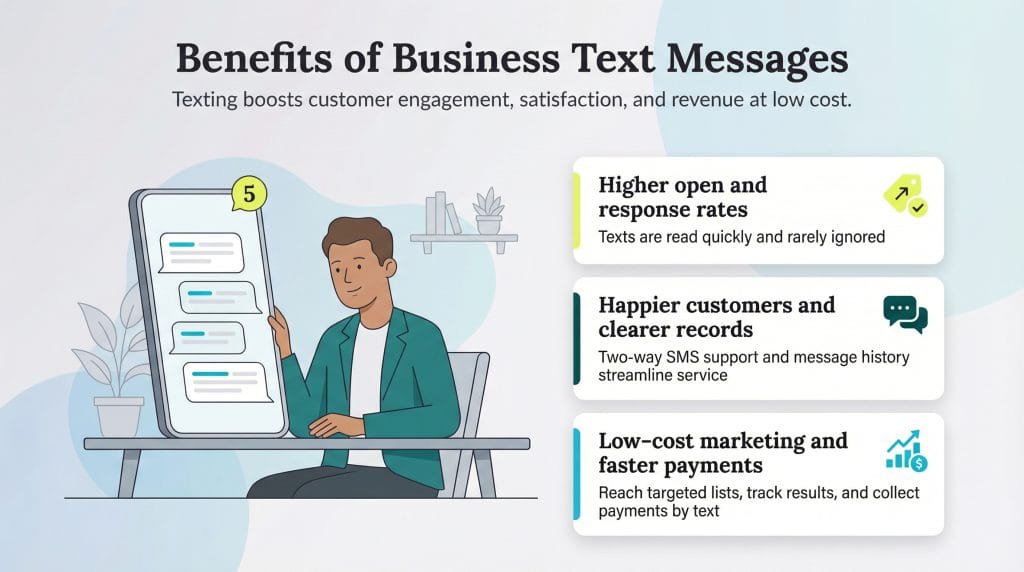
Business texting is not merely a method of communication; it significantly enhances customer engagement and satisfaction. Organizations that adopt this strategy often see improvements in their interaction quality:
- Higher Engagement Rates: Customers experience seven times more engagement with text communications than with traditional channels.
Leveraging business texting as a key component of communication strategies can lead to enhanced customer satisfaction and loyalty.
What is SMS Automation?
Introduction to SMS Automation
SMS automation refers to the technology that enables businesses to send personalized text messages automatically based on specific triggers. This can include:
- Scheduling messages for scheduled reminders.
- Sending alerts for appointments and promotions.
- Customizing communications based on customer behavior.
Implementing SMS automation streamlines communication and ensures customers receive timely and relevant messages, effectively enhancing business texting efforts.
Practical Integration Strategies
Integrating SMS Automation in Business Strategies
For businesses looking to integrate SMS automation effectively, consider these practical steps:
- Choose a Platform: Select an SMS automation platform that fits your business needs and supports various integrations.
- Segment Your Audience: Tailor messaging by segmenting your customer base, ensuring targeted and relevant communications.
- Utilize Analytics: Leverage analytics tools to continuously refine and improve your messaging strategies.
These strategies enhance the effectiveness of SMS automation and align with overall business texting objectives, driving engagement and effectiveness.
Best Practices for Business Texting
Aligning Communication Methods with Customer Preferences
To create a successful business texting strategy, adhering to best practices is essential. Here are some key guidelines:
- Gain Consent: Always obtain explicit consent from customers before sending them text messages. This not only builds trust but also ensures compliance with regulations.
- Personalize Messages: Tailoring messages to individual customer preferences can significantly enhance engagement.
- Avoid Over-Messaging: Prevent annoyance by limiting the frequency of messages. Respecting customers’ time increases the chances of a favorable response.
Following these best practices ensures that business texting aligns with customer communication trends while promoting positive relationships.
Success Stories
Real-world Examples and Case Studies
Understanding the success of business texting comes to life through real-world examples:
- Retail Business Case Study: A retail store that implemented business texting saw a doubling of customer engagement rates within a few months. Customers appreciated quick alerts about sales and promotions via text, leading to increased foot traffic and sales.
- Service Provider Success: A service provider improved customer satisfaction levels through timely SMS updates about service appointments. Customers responded positively to the reminders and felt valued through the proactive communication approach.
These success stories highlight the potential of business texting to foster customer loyalty and engagement.
Conclusion
Embracing the shift toward text messaging as a primary communication method is crucial for businesses looking to remain relevant and effective. As evidenced by numerous studies, customers prefer text messaging as their communication choice. To harness this trend, businesses should adopt texting methods and implement SMS automation strategies that align with customer preferences. By doing so, they can create a superior customer experience that encourages engagement and satisfaction.
Encourage your business to explore the possibilities of texting and automation in your communication strategies—it's a necessary step toward modern customer engagement.
Additional Resources:
- For effective strategies on how to enhance customer communication utilizing automation, check out our post on How AI Automation Transforms Small Businesses.
- Learn about the impact of unanswered calls on customer engagement in our article How Unanswered Business Calls Cost Revenue and How to Fix It.
- Discover practical tips for appointment reminders and scheduling efficiency with Optimizing Appointment Management: How AI Messaging for Appointment Reminders Reduces Phone Tag and Missed Appointments.
- Explore the integration of AI tools in Improving Patient Communication with AI in Healthcare: Enhancing Trust and Satisfaction Through Technology.
- Understand the role of customer expectations in business responsiveness in Understanding Why Customers Expect 24/7 Availability and How Businesses Can Meet This Demand.
FAQ
Why do customers prefer text messaging for business communication?
Customers prefer text messaging because it is fast, convenient, and allows them to respond at their own pace. It reduces wait times and increases the likelihood of immediate responses.
Is business texting more effective than phone calls or emails?
Yes. Business texting has higher engagement and response rates than phone calls or emails, making it a more effective communication method for many customers.
What are best practices for using SMS automation in business?
Best practices include obtaining customer consent, personalizing messages, segmenting your audience, and avoiding over-messaging to respect customer time and preferences.
How does SMS automation improve customer experience?
SMS automation ensures that messages are timely, relevant, and personalized, fostering greater satisfaction and engagement through efficient communication.
Can SMS automation be integrated with other business tools?
Absolutely. Many SMS automation platforms support integration with CRMs and marketing tools to provide a seamless, unified communication strategy.
